Decoding the dark proteome through interdisciplinary training and research - ORFeus
ORFeus is a European doctoral network in which 15 PhD researchers study the dark proteome: a group of proteins, unknown until recently, that helps steer processes in (cancer) cells. By bringing together research and training in this emerging field, ORFeus aims to open the way to new treatments, including immunotherapy for childhood cancer. The Princess Máxima Center coordinates the network, in line with its mission: to cure every child with cancer while preserving their quality of life.
Project objective
The dark proteome consists of small proteins (microproteins) that have long been overlooked. They may play a key role in disease and in the development of new treatments. ORFeus trains 15 PhD researchers to become independent scientists and, at the same time, brings together the knowledge and technology needed to open up this field.
Impact on the Máxima mission
A better understanding of the dark proteome can reveal new targets for therapies, including immunotherapy against childhood cancer. In this way the network contributes to the Máxima mission: to cure every child with cancer while preserving their quality of life.
Our role
The Princess Máxima Center is the coordinator of ORFeus. The research group of Dr. Sebastiaan van Heesch leads the consortium and supervises one of the PhD researchers.
What makes ORFeus unique
The network combines scientific specialization with broader professional development, international exchange, and secondments at participating companies. Academic groups and companies work closely together, so that promising discoveries can reach the clinic faster. The proposal received the maximum score of 100% from the reviewers.
In brief
15 PhD researchers and 15 research groups, hosted by 14 universities and research institutes, together with 13 companies and research partners across twelve countries. The network is expected to start in October 2026 and runs for four years; the first PhD researchers begin in March 2027.
Box partners
Research institutions
Princess Máxima Center for pediatric oncology (NL, coordinator) · Hubrecht Institute – KNAW (NL) · Antoni van Leeuwenhoek / Netherlands Cancer Institute (NL) · Ghent University (BE) · University of Dundee (UK) · The Institute of Cancer Research, London (UK) · University of Leeds (UK) · University of Southampton (UK) · University College Cork (IE) · University of Oslo (NO) · Hospital del Mar Research Institute (ES) · University of Freiburg (DE) · Max Delbrück Center for Molecular Medicine (DE) · University of Lausanne (CH)
Companies and research partners
Enara Bio (UK) · Oxford Nanopore Technologies (UK) · EIRNA Bio (IE) · Bruker (DE) · myNEO (BE) · Boehringer Ingelheim (AT) · Immudex (DK) · Immagina Biotechnology (IT) · Tesorai (US) · ProFound Therapeutics (US) · Genentech (US) · EMBL-EBI – European Bioinformatics Institute (UK/DE) · Oncode Institute (NL)
Contact
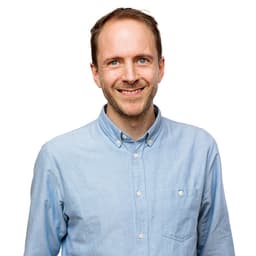
Sebastiaan van Heesch

Simon Venneman
Funded by the European Union. Views and opinions expressed are however those of the author(s) only and do not necessarily reflect those of the European Union or the European Research Executive Agency (REA). Neither the European Union nor the granting authority can be held responsible for them. (Grant Agreement No. 101309891).