Future-oriented exercise support
The Sports and Exercise Center at the Princess Máxima Center consists of pediatric physical therapists, researchers, the coordinator, and students of ‘Maximaal Bewegen.’ We integrate care and research to optimize the physical development and quality of life of children with cancer. On this page, you can read about our vision, our care services, our research focus, and our collaboration with professionals in the Netherlands and abroad.
Contact
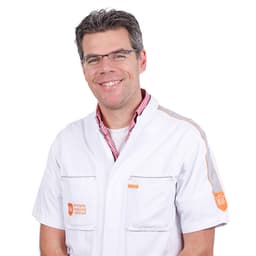
Patrick van der Torre
Pediatric physical therapist, Head of the Sports and Exercise Center
Why physical activity is essential during treatment
Physical activity is essential for every child’s development. During cancer treatment, we see that children quickly lose muscle strength, endurance, and functional abilities. This affects their daily functioning and recovery. That is why we provide exercise support at the Princess Máxima Center from the moment of diagnosis. Through the Sports and Exercise Center, we ensure that every child continues to move during treatment, within their own abilities.
We follow international guidelines in pediatric oncology, including those of SIOP-Europe and the International Pediatric Oncology Exercise Guidelines. These guidelines emphasize that early and appropriate physical activity helps children stay physically and mentally strong. Our approach aligns with these recommendations and is a structural part of development-oriented care.
Titel
- Our exercise support in practiceStepped-care model
We work according to a stepped-care model, in which the intensity of exercise support is tailored to individual needs. Each level builds on a solid foundation of information, guidance, and child-friendly exercise facilities.
Figure 1. Pediatric Psychosocial Preventive Health Model – Kazak A. et al.
Maximaal BewegenThe ‘Maximaal Bewegen’ program is at the core of our exercise support. It helps children and parents stay active, both during hospital admission and at home, through daily, achievable physical activities. These activities match the child’s level and the specific needs of the child and parents.
We offer exercise sessions at set times, tailored by age group, such as toddler gym and teen sports. We also encourage children to stay active in their rooms, so that movement becomes a natural part of the day.
Specialized interventionsFor children with specific risks or support needs, such as brain tumors, bone tumors, or loss of strength, balance, and mobility due to treatment, we provide direct pediatric physical therapy care. In addition, several care improvement initiatives are underway, including:
ALL gait function study: insight into temporary functional loss and expected recovery
Fit-4-Surgery: prehabilitation for children with bone tumors
Postoperative exercise recommendations for children with endoprostheses
Multidisciplinary fatigue clinic: support for long-term fatigue
Shared decision-makingWe actively involve children and parents in choices that affect daily functioning. We do this by discussing their personal goals: what they want to achieve and what matters most to them.
Through research on shared decision-making, we also improve support for choices related to surgery and recovery. In this way, decisions are medically sound and aligned with the wishes and possibilities of both child and parents.
- Research: focused on physical vulnerability and recoveryIdentifying and understanding physical vulnerability
We develop methods to better assess children with increased physical vulnerability, such as the Pediatric SARC-F questionnaire. This allows us to identify children who need additional support and to study which factors influence their recovery.
Monitoring gait function and physical activityWe study how disease, medication, and surgery affect motor skills and gait function. We focus on:
the effects of treatment phases in acute lymphoblastic leukemia (ALL);
recovery after brain tumors;
changes in muscle function and movement patterns.
In addition, we conduct studies using wearable technology, such as smartwatches, to monitor physical activity over a longer period and in real time.
Interventions and prehabilitationWe develop and test interventions that can be introduced at the right time during the treatment process, such as:
prehabilitation before stem cell transplantation (SCT);
Fit-4-Surgery for children with bone cancer;
home-based exercise programs, in collaboration with colleagues in community care.
- Knowledge sharing and collaborationProfessionals within and outside the Máxima Center
At the Máxima Center, we provide education for nurses, physicians, and other healthcare professionals to help integrate exercise support into daily practice.
Outside the Máxima Center, we share our expertise through guest lectures, workshops, symposia, and online modules. In this way, we strengthen exercise support for children with cancer in the Netherlands and internationally.
KinderOncoNetThrough the national network KinderOncoNet, we improve the continuity and quality of exercise support close to home. Healthcare professionals in primary, secondary, and tertiary care can find:
reliable and relevant information
training on specific diagnoses
colleagues with expertise in pediatric oncology
Education and international collaborationWe collaborate with Utrecht University of Applied Sciences, the Wilhelmina Children’s Hospital, and international partners. Together, we develop interventions, new treatment strategies, and international guidelines for exercise support.
Within SIOP’s international Rehabilitation & Physical Medicine working group, we contribute to knowledge exchange, innovation, and international consensus building.
Building integrated exercise support together
Our goal is clear: to guide children with cancer as effectively as possible, from diagnosis through reintegration into daily life.
By connecting care, research, and collaboration, we develop exercise support that is effective today and sustainable for the future.
Would you like to contribute ideas, collaborate, or share knowledge? We invite you to help us continue building integrated exercise support together. You can reach us at one of the following email addresses: